
By Supang Hegde, Head of Marketing, Chartered Housing | Updated 23 July 2026
Across the world’s big cities, the old middle-class arithmetic has stopped working. In Seoul and London, a well-paid young professional can work for a decade and still not close the gap to a home of their own. In Mumbai, the city has very limited room to expand outward. With little space left, prices have risen sharply, pushing professionals towards smaller and smaller apartments. For an entire generation, the dream of a garden, clean air, and space to breathe feels like a relic of the past.
Bangalore is the interesting exception. For anyone weighing a plotted land investment in Bangalore, the window here has not closed. You just have to look in the right direction — west.
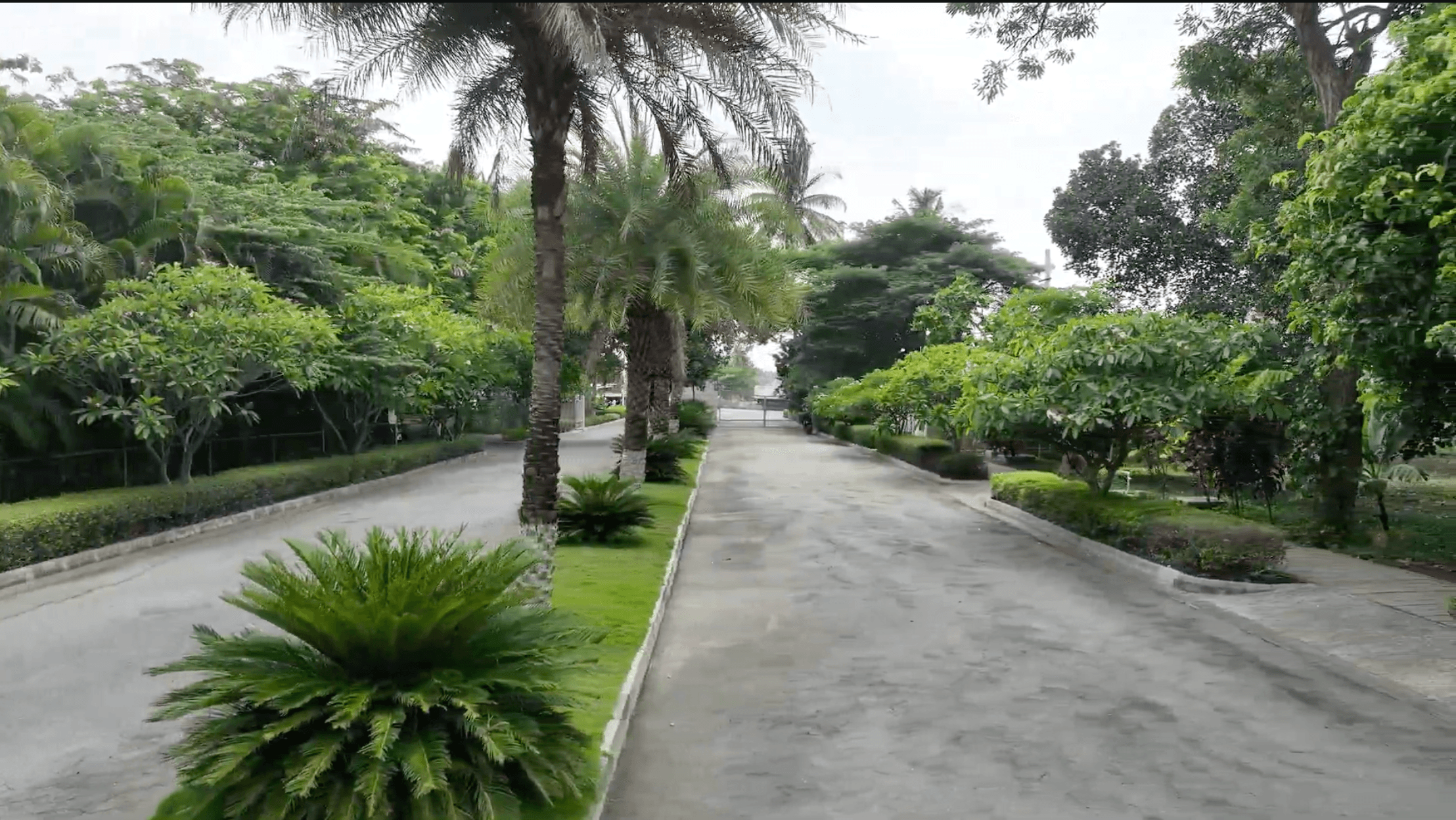
The Bangalore Paradox: Why the Western Corridor Still Has Room
Bangalore’s rise as the “Silicon Valley of Asia” has brought undeniable growing pains. As the population has grown — and with more than 1.2 crore registered vehicles by early 2025, according to Transport Department data reported at the time — the daily commute has become an endurance test of gridlock, dust and density.
For anyone sitting in traffic, watching the city expand endlessly, the question is hard to avoid: how long can this pace be sustained?
When a city grows like this, land along its growth corridors can be where value follows. For the last few years, one of Bangalore’s clearest paths has run west — towards Nelamangala.
Gold vs Mutual Funds vs Plotted Land: The Five-Year Data
Not every asset does the same job
When trying to escape the urban grind, young professionals often debate gold vs mutual funds vs real estate. While these traditional assets build financial wealth, they do not address the most pressing urban challenge: the declining quality of daily life. Looking at land investment vs mutual funds in India over a five-year window shows why.
Let’s look at the five-year data to see how traditional assets compare to plotted land.
The 5-year asset comparison
Note: This is directional context, not a perfect apples-to-apples comparison. Land is priced by locality, while financial assets are valued daily.
| Asset | Five-Year Indicator | The “Job” It Does | The Trade-offs |
| Gold | ~24.6% p.a. | Financial security: liquid, easy to value, a traditional store of wealth | Storage costs, making charges, purity spreads, and zero usable space |
| Nifty 50 Index (price return) | ~13.3% p.a. | Market growth: highly liquid, transparent pricing, diversified | Exposed to market volatility, zero physical utility |
| Plotted land (e.g. Nelamangala) | ~20.7% p.a. | Wealth + utility: long-term appreciation with the actual option to build a home | Low liquidity, high transaction costs, requires strict legal and developer due diligence |
The bottom line: what job do you need the asset to do?
Gold led over this five-year window, but a sound financial strategy means diversifying for your specific needs. High historical returns don’t automatically make something the right investment for you. The better question is: what job do you need the asset to do?
- Choose gold or index funds if your only goal is liquid financial wealth.
- Choose plotted land if you want an investment that bridges financial growth with tangible utility — securing the wider, more relaxing space your future lifestyle will require, at today’s prices.
Which Real Estate Asset Class Is Right for You?
Real estate isn’t only about building wealth; it is also about securing your future way of living. Fast forward five to ten years: you may want more space to breathe, a quieter environment, and a healthy, open place to grow older in. To make that lifestyle possible tomorrow, the foundation may need to be laid today.
With that goal in mind, standard real estate options can fall short. Here is the reality check:
- Commercial spaces — high barrier to entry. Prolonged vacancy periods create holding costs that drain liquidity rather than generating passive income.
- Residential apartments — a key factor when weighing plotted land vs apartment investment: buildings generally depreciate over time, while land may appreciate depending on location and demand. You pay a premium for a structure but retain only a fractional Undivided Share (UDS), which limits long-term capital appreciation.
- Luxury villas — high capital lock-in. You pay developer markups on construction, which reduces overall ROI and restricts portfolio liquidity.
- Vacation homes — marketed as an investment, but they function as active property management. Seasonal vacancies and heavy wear make this a second job in hospitality.
- Farmland — highly illiquid and time-intensive. Operational oversight, security needs, and complex conversion and zoning laws negate the peace of mind you were trying to buy.
- REITs and fractional real estate — excellent for financial diversification, but with zero lifestyle utility. You own digital shares, not a physical foundation for a future home.
That leaves one of the more strategic, relatively low-maintenance asset classes: premium plotted land
Why plotted land rewards patience
A plot in a growing corridor rewards patience. As the area develops, your land has the potential to grow in value — with low upkeep, no building to depreciate, and the freedom to create a home when the time is right.
Being realistic about real estate, though, means understanding both sides of the coin.
What Plotted Land Can — and Cannot — Do
A well-chosen plot gives you the flexibility to hold the asset, build your home later, or sell when the location matures. That flexibility is part of the appeal. But plotted land also comes with limitations that don’t always come up in a sales conversation.
Four limitations to know before you buy
- Zero rental income. The land sits idle and generates no cash flow while vacant.
- Low liquidity. It takes time to find the right buyer and close a sale.
- Transaction and holding costs. Registration, stamp duty, taxes and maintenance fees reduce your actual returns.
- Micro-location matters. Two plots a kilometre apart can have very different market values.
Once you understand these realities, the question shifts entirely to choosing the right corridor — which is why Nelamangala plots are drawing steady interest.
Why West Bangalore and Nelamangala Deserve Attention
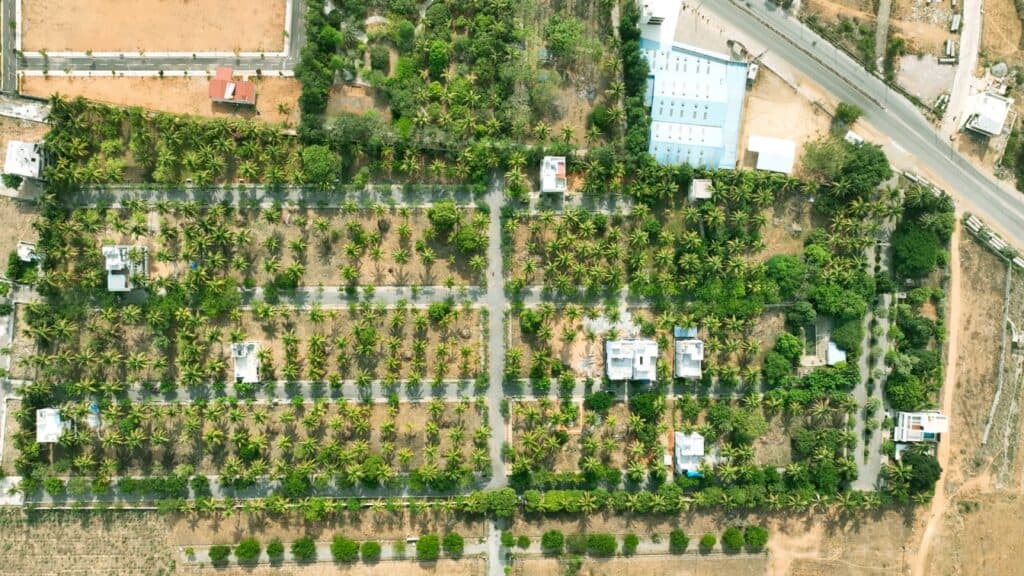
As Bangalore’s growth intensifies traffic and housing pressure, it’s worth imagining the reality of city-centre living ten years from now. That’s where West Bangalore changes the picture. While the eastern IT corridors have become more crowded and more expensive, plotted development in West Bangalore still offers a window for early buyers.
Its growth is anchored by three infrastructure pillars, each at a different stage — and the stage matters.
NH-48 Nelamangala corridor — operational today
The Bangalore–Nelamangala–Tumakuru highway already connects the western corridor with the city and the wider state road network.
STRR — partly operational, still expanding
The 42 km Dobbaspet–Doddaballapur stretch opened to traffic and tolling in June 2024. Other sections of the wider ring-road programme remain at different stages of approval and development.
Metro — proposed, not yet operational in Nelamangala
The Green Line currently terminates at Madavara. A DPR for a proposed Madavara–Tumakuru corridor via Nelamangala was reported as submitted to the Karnataka government in May 2026. The project remains subject to approvals, funding and execution timelines.
The Real Risk Isn’t the Land — It’s the Developer
If West Bangalore is such a clear opportunity, why isn’t everyone already here? One word: trust.
A growing corridor may create opportunity, but it does not make every layout equal. Two plots a kilometre apart can perform very differently depending on title, approvals, drainage and quality of development. Unregistered players may offer attractive prices but can leave buyers exposed, while larger brands may charge a significant premium for reassurance. In the end, choosing land is as much about choosing the developer as it is about choosing the location.
How Chartered Builds Trust: Proof After a Decade
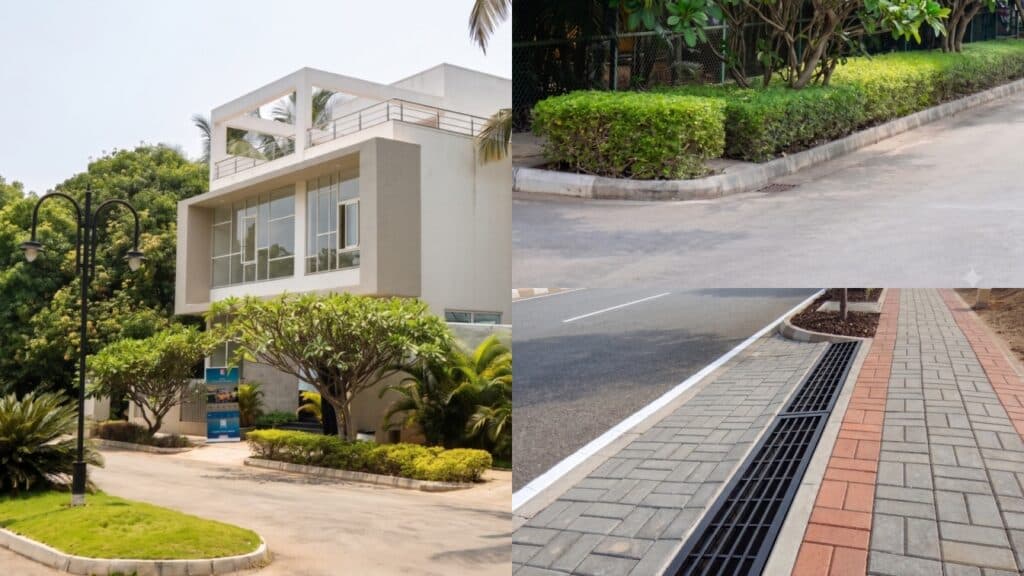
Chartered has been building in Bangalore since 1989. When Chartered Veda launched in Nelamangala in 2016, it set out what we believed a premium plotted layout could be. Today, that project is our proof of concept. The roads, the drainage and the mature trees we preserved have all weathered a decade of real life. It is not a concept or a promise — it is a settled community that quietly shows what we stand for.
We design around the land, not over it
Existing trees and rock formations are considered during planning rather than automatically cleared. Where new planting is required, the emphasis is on species suited to Bangalore’s climate and long-term maintenance.
We respect the terrain, so water has somewhere to go
Flattening a site is a common shortcut that quietly causes waterlogging for years afterwards. Instead, we work with the land’s natural elevation. By engineering road gradients and underground storm-water systems to follow the original contours, rainwater is guided away naturally. This approach is designed to improve drainage and reduce the risk of waterlogging during heavy monsoons — without relying on cosmetic corrections later — while preserving the character of the landscape.
We build honestly, and let our residents vouch for us
Utilities are routed underground, with above-ground access so future repairs need not mean digging up your street. We keep pricing straightforward and titles clear. Many of our buyers come through word-of-mouth from people already living in a Chartered layout — because we build for the long term, not the quick sale.
These details are not as dramatic as an investment headline. But over ten or fifteen years, they are often what separate a plot on paper from a place people genuinely want to live.
See Chartered Gulmohar for Yourself
If this article made you pause and think, “I’ve never looked at wealth and land quite this way before” — it may be time to visit Chartered Gulmohar in person.
Chartered Gulmohar RERA registration number: PRM/KA/RERA/1250/307/PR/110226/008465. Project details are on the Chartered Gulmohar project page. You can verify the registration on the Karnataka RERA portal.
Frequently Asked Questions
It depends on your financial goals. Unlike a financial asset, a plot gives you the flexibility to build a home later while still offering the potential for long-term appreciation. That said, a plotted land investment in Bangalore is a long-term commitment, best chosen after weighing the location, the legal approvals and the developer’s track record.
Each asset does a different job. Gold is a store of value, mutual funds give you liquid market participation, and plotted land pairs long-term appreciation with the option to build. Over the five-year windows in this article, gold led at about 24.6% p.a., plotted land near Nelamangala at about 20.7%, and the Nifty 50 price index at about 13.3% — though these aren’t directly comparable. Rather than asking which performs best, it’s more useful to ask which one fits your goals and lifestyle.
Nelamangala has become one of West Bangalore’s key growth corridors, helped by improving road connectivity and planned infrastructure. The operational NH-48 Nelamangala corridor, the STRR being built in phases and a proposed metro extension have all drawn interest to the area. As with any real estate purchase, though, a plot’s long-term value depends not only on location but on approvals, infrastructure and the quality of the development.
Before you buy a plot near Nelamangala, confirm the project has clear legal titles, the necessary approvals and, where applicable, RERA registration. It’s also worth checking the developer’s completed projects, the drainage planning, the underground infrastructure and the overall quality of the layout. Walking through an occupied project usually tells you more about how a development ages than any brochure or master plan.
Sources and Methodology
Data accessed 23 July 2026. The five-year windows are not identical across sources, so each one is disclosed below. This comparison is for general information and does not constitute financial advice or a projection of returns for Chartered Gulmohar. Chartered Housing is not a registered investment adviser.
- Gold, ~24.6% p.a. — CAGR calculated from published annual-average prices for FY2020–21 and FY2025–26 (RBI-derived series).
- Nifty 50 index, ~13.3% p.a. — CAGR calculated from NSE Indices published closing levels for the Nifty 50 price index (31 Dec 2020 – 31 Dec 2025).
- Plotted land, Nelamangala, ~20.7% p.a. — from locality plot-rate trend published by 99acres. Limitations apply regarding transaction costs, liquidity and timing.
- Transport and infrastructure data — NHAI Annual Report 2023–24, Indian Infrastructure (May 2026), and Transport Department data reported by The Times of India.